Packing for the Sahara is about two things: the big temperature difference between day and night, and the fine sand that gets everywhere. You do not need special equipment. A few well-chosen items will make the long drives, the camel ride and the night at camp much more comfortable.
Pack two bags
On most desert tours, your main suitcase stays in the vehicle or at a hotel in Merzouga or Zagora while you ride to camp. Bring a small backpack for the night in the dunes, holding only what you need until the next morning. A soft bag is easier to carry on a camel than a hard case.
Clothing
- Light, loose layers in breathable fabric for the day. Long sleeves protect from the sun better than a T-shirt.
- A warm layer such as a fleece or a light down jacket. Evenings are cool in every season except mid-summer, and cold in winter.
- Long trousers for the camel ride. Shorts tend to rub.
- A scarf or cheche (the desert turban, easy to buy locally) against sun, wind and sand.
- Modest clothing for villages and towns: shoulders and knees covered is a respectful choice.
Footwear
Sand is soft and hot in the afternoon and cold at night. Many travellers walk barefoot on the dunes in the evening. For everything else, pack closed trainers for the gorges and kasbahs and sandals for the camp. Heavy hiking boots are only needed if you add a trek in the High Atlas.
Personal essentials
- Sunglasses, a hat and high-protection sunscreen.
- Lip balm and moisturiser, because the desert air is very dry.
- A reusable water bottle.
- A small torch or headlamp for walking around the camp at night.
- Wet wipes and hand sanitiser.
- Personal medication, plus something for motion sickness if mountain roads bother you.
- Cash in Moroccan dirhams for drinks, tips and small purchases.
- Your passport, which hotels and camps may ask to see.
Photography
- Protect your camera from sand. Use a zip bag or a cover and avoid changing lenses in the wind.
- Bring a power bank. Electricity at camps can be limited.
- A small tripod helps for night shots of the stars.
- Always ask before photographing people, especially in villages.
Seasonal extras
November to March
Add a warm jacket, a hat, gloves and warm socks for the night. Temperatures in the desert can approach freezing, and the High Atlas passes can be snowy.
June to September
Bring very light, covering clothing, electrolyte sachets and extra water. A wide-brimmed hat is better than a cap. See our guide to the best time to visit the Sahara for more on summer travel.
What you do not need
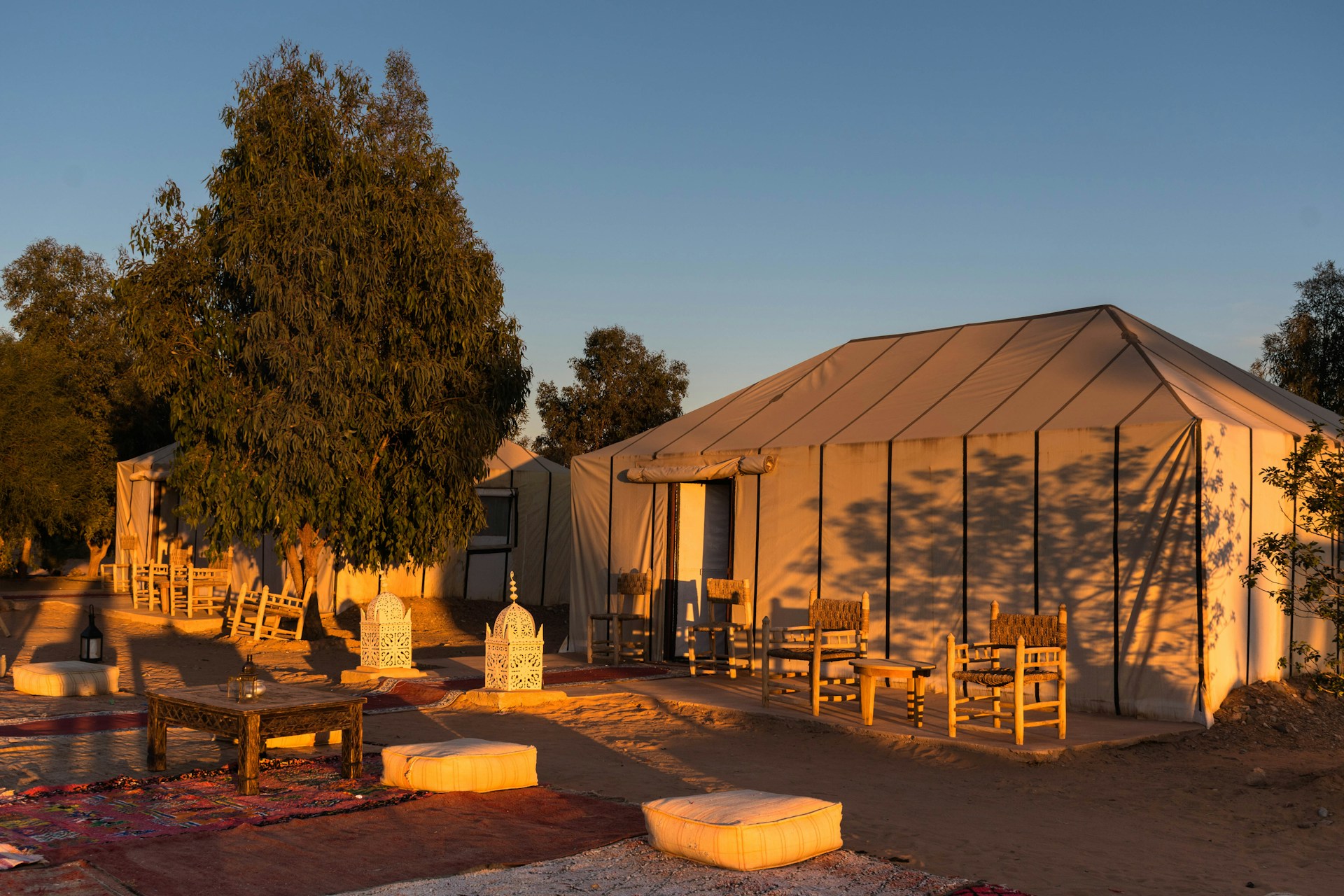
- Sleeping bags: bedding is provided at camps (ask your operator to confirm).
- Large amounts of food: meals at the camp and in hotels are usually included as stated in your program.
- Expensive jewellery or valuables you would not want to carry into the dunes.
Frequently asked questions
Can I charge my phone at the desert camp?
Many camps have charging points, often powered by solar energy, but capacity varies. Bring a charged power bank to be safe.
Is there Wi-Fi in the desert?
Some camps offer Wi-Fi, and mobile coverage reaches parts of Erg Chebbi, but do not count on it. Many travellers enjoy the night offline.
Packed and ready? Choose your itinerary among our tours from Marrakech or read how to choose the right desert tour.