Category: Morocco Travel Planning

Advice for planning a private journey through Morocco.

  • What to Pack for a Marrakech Desert Tour

    What to Pack for a Marrakech Desert Tour

    Packing for the Sahara is about two things: the big temperature difference between day and night, and the fine sand that gets everywhere. You do not need special equipment. A few well-chosen items will make the long drives, the camel ride and the night at camp much more comfortable.

    Pack two bags

    On most desert tours, your main suitcase stays in the vehicle or at a hotel in Merzouga or Zagora while you ride to camp. Bring a small backpack for the night in the dunes, holding only what you need until the next morning. A soft bag is easier to carry on a camel than a hard case.

    Clothing

    • Light, loose layers in breathable fabric for the day. Long sleeves protect from the sun better than a T-shirt.
    • A warm layer such as a fleece or a light down jacket. Evenings are cool in every season except mid-summer, and cold in winter.
    • Long trousers for the camel ride. Shorts tend to rub.
    • A scarf or cheche (the desert turban, easy to buy locally) against sun, wind and sand.
    • Modest clothing for villages and towns: shoulders and knees covered is a respectful choice.

    Footwear

    Sand is soft and hot in the afternoon and cold at night. Many travellers walk barefoot on the dunes in the evening. For everything else, pack closed trainers for the gorges and kasbahs and sandals for the camp. Heavy hiking boots are only needed if you add a trek in the High Atlas.
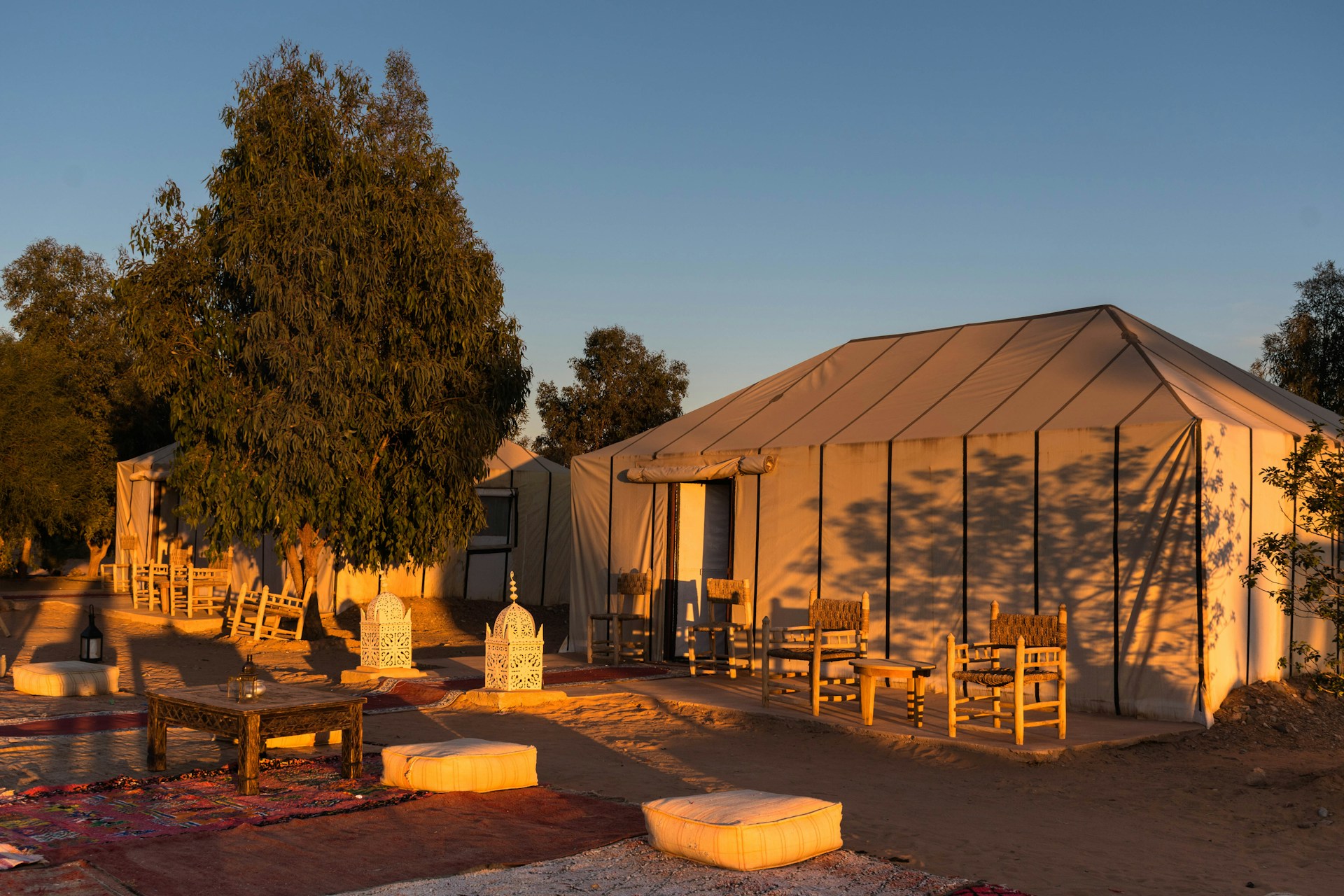
    Traditional tent at a desert camp in the Moroccan Sahara
    Keep a small overnight bag for the camp. Your main luggage stays behind.

    Personal essentials

    • Sunglasses, a hat and high-protection sunscreen.
    • Lip balm and moisturiser, because the desert air is very dry.
    • A reusable water bottle.
    • A small torch or headlamp for walking around the camp at night.
    • Wet wipes and hand sanitiser.
    • Personal medication, plus something for motion sickness if mountain roads bother you.
    • Cash in Moroccan dirhams for drinks, tips and small purchases.
    • Your passport, which hotels and camps may ask to see.

    Photography

    • Protect your camera from sand. Use a zip bag or a cover and avoid changing lenses in the wind.
    • Bring a power bank. Electricity at camps can be limited.
    • A small tripod helps for night shots of the stars.
    • Always ask before photographing people, especially in villages.

    Seasonal extras

    November to March

    Add a warm jacket, a hat, gloves and warm socks for the night. Temperatures in the desert can approach freezing, and the High Atlas passes can be snowy.

    June to September

    Bring very light, covering clothing, electrolyte sachets and extra water. A wide-brimmed hat is better than a cap. See our guide to the best time to visit the Sahara for more on summer travel.

    What you do not need

    • Sleeping bags: bedding is provided at camps (ask your operator to confirm).
    • Large amounts of food: meals at the camp and in hotels are usually included as stated in your program.
    • Expensive jewellery or valuables you would not want to carry into the dunes.

    Frequently asked questions

    Can I charge my phone at the desert camp?

    Many camps have charging points, often powered by solar energy, but capacity varies. Bring a charged power bank to be safe.

    Is there Wi-Fi in the desert?

    Some camps offer Wi-Fi, and mobile coverage reaches parts of Erg Chebbi, but do not count on it. Many travellers enjoy the night offline.

    Packed and ready? Choose your itinerary among our tours from Marrakech or read how to choose the right desert tour.
  • Best Time to Visit the Sahara Desert in Morocco

    Best Time to Visit the Sahara Desert in Morocco

    The Moroccan Sahara can be visited all year, but the experience changes a lot from one season to the next. Afternoons can be pleasantly warm in March and extremely hot in July. Nights can be mild in October and close to freezing in January. Here is what to expect so you can choose your dates and pack the right clothes.

    The short answer

    March to May and late September to November are generally the most comfortable months: warm days, cool evenings and good light for photography. Winter is a good alternative if you do not mind cold nights. Summer is possible with careful planning, early starts and a camp that is equipped for the heat.

    Season by season

    SeasonDaysNightsGood to know
    Spring (Mar–May)Warm, pleasantCoolVery popular. Windy days and sandstorms can occur.
    Summer (Jun–Aug)Very hot, often above 40 °CWarmPlan activities at sunrise and sunset. Rest at midday.
    Autumn (Sep–Nov)Warm, then mildCool to coldExcellent light and comfortable camel rides.
    Winter (Dec–Feb)Mild and sunnyCold, sometimes near 0 °CClear starry skies. Snow is possible on the Atlas passes.

    Temperatures vary from year to year. Check a recent forecast for Merzouga or Zagora a few days before you travel.

    Spring (March to May)

    Spring is high season for good reason. The valleys are green, the Valley of Roses around Kelaat M’Gouna blooms in late April and early May, and days in the desert are comfortable. The main downside is wind: spring is the most likely season for sand-laden winds that can blur the views for a few hours. Easter holidays are busy, so book early.

    Summer (June to August)

    Summer in the Sahara is extremely hot during the day. Tours still run, but the schedule changes: camel rides happen late in the afternoon and at dawn, and the middle of the day is spent in the shade or by a pool. Choose air-conditioned accommodation where possible, drink a lot of water and avoid physical effort at midday. The crossing of the High Atlas is a welcome cool break.

    Autumn (September to November)

    Autumn brings softer heat and golden light. September can still be hot, October is usually ideal and November starts to bring cold nights. The date harvest takes place in the oases in autumn, and markets in Rissani and Erfoud are full of fresh dates.

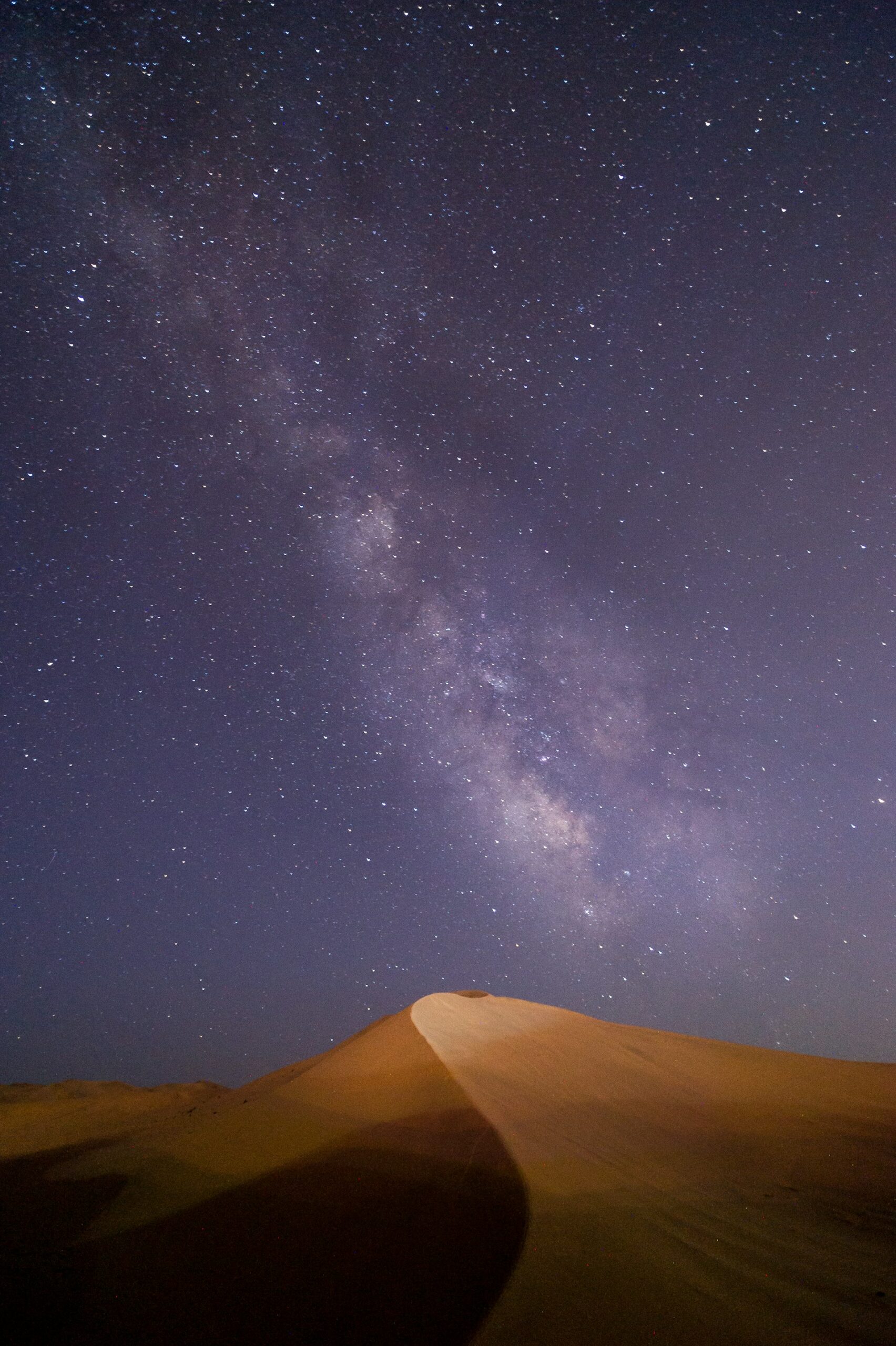
    The Milky Way stretching across the night sky above the desert
    Cold, clear winter nights are perfect for stargazing.

    Winter (December to February)

    Winter days are often sunny and pleasant, ideal for walking in the dunes. Nights are cold, and that is when the camp makes the difference: ask whether tents have thick blankets, hot water and heating. The skies are often exceptionally clear, which makes winter a great season for stargazing. Snow can occasionally affect the Tizi n’Tichka pass and the Middle Atlas, so a flexible itinerary helps.

    Other dates to consider

    • Ramadan: the dates move each year. Tours run normally, though some restaurants keep different hours during the day.
    • School holidays (Christmas, Easter, summer): book desert camps well in advance.
    • Full moon: the dunes are beautifully lit, but you will see fewer stars. Choose a new moon if stargazing is your priority.

    So, when should you go?

    If your dates are flexible, aim for spring or autumn. If they are not, every season can work with the right itinerary, camp and clothing. Our team adjusts timings to the season, for example earlier departures in summer and warmer camps in winter. Read our desert packing guide and explore our desert tours.

    Frequently asked questions

    Is it too hot to visit the Sahara in summer?

    It is very hot, but manageable if you avoid the midday sun, stay hydrated and choose comfortable accommodation. People sensitive to heat should prefer another season.

    Does it rain in the Moroccan Sahara?

    Rarely. Short storms can happen, but rain is not usually a factor when planning a desert trip.

  • Marrakech to Fes via the Sahara: Complete Travel Guide

    Marrakech to Fes via the Sahara: Complete Travel Guide

    Many visitors arrive in Marrakech and fly home from Fes, or the other way round. Instead of taking the direct road or train between the two cities, you can cross the country through the south: over the High Atlas, along the valleys of kasbahs, into the dunes of Erg Chebbi and back up through the Middle Atlas. It takes three days or more and turns a transfer into the highlight of the trip.

    The route

    Marrakech → Tizi n’Tichka → Ait Ben Haddou → Ouarzazate → Dades Valley → Todra Gorge → Merzouga → Ziz Valley → Midelt → Ifrane → Fes.

    The first half is identical to the classic Merzouga tour. The difference comes after the night in the dunes: instead of returning west, you head north from Erfoud to Errachidia, through the palm-filled Ziz Gorges, over the high plateau around Midelt and into the cedar forests of the Middle Atlas. The final stretch passes Ifrane, sometimes called “the Switzerland of Morocco” for its alpine-style houses, before descending to Fes.

    Key sights along the way

    • Ait Ben Haddou, the UNESCO-listed fortified village near Ouarzazate.
    • The Dades Valley, with its kasbahs and rock formations.
    • The Todra Gorge, a narrow canyon with walls up to several hundred metres high.
    • Erg Chebbi, the high dunes of Merzouga, with a camel ride and a night at camp.
    • The Ziz Valley, a long ribbon of palm groves seen from viewpoints above the gorge.
    • The cedar forests near Azrou and Ifrane, home to Barbary macaques.
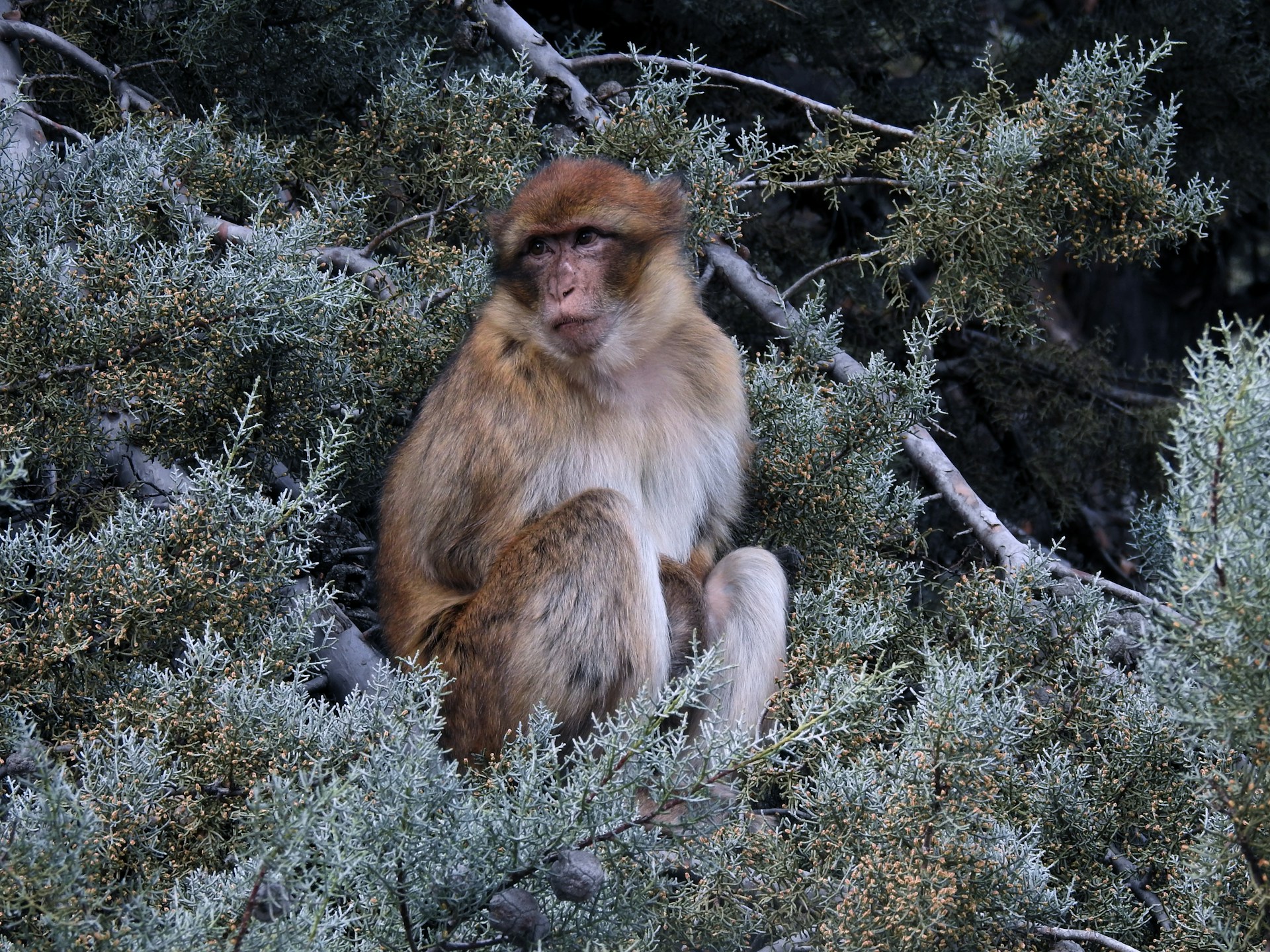
    Barbary macaque sitting in a tree in the Middle Atlas cedar forest near Ifrane
    Barbary macaques live in the Middle Atlas cedar forests on the last stretch to Fes.

    How many days?

    3 days: the efficient crossing

    Night 1 in the Dades Valley, night 2 in a Merzouga camp, then the drive to Fes on day 3 (around eight hours with stops). It is the fastest way to combine the desert with the north. See the 3 Days Marrakech to Fes via the Sahara.

    4 days: time to enjoy the dunes

    The extra day is spent around Merzouga: Khamlia village, Rissani, the dunes at your own pace and a second night at camp. It is the most popular version for good reason. See the 4 Days Marrakech to Fes Desert Tour.

    7 days or more: a full loop

    If you also want to see Rabat, Meknes, Volubilis or Chefchaouen, a longer circuit like the 7 Days Imperial Cities and Sahara Tour or the 8 Days Marrakech Morocco Discovery Tour connects everything without rushing.

    Doing it in reverse: Fes to Marrakech

    The route works just as well from north to south. The first day from Fes to Merzouga is long, so many travellers prefer the 4-day version. Browse our tours from Fes for the reverse itineraries.

    Planning tips

    • Luggage: a one-way private tour carries all your luggage, which makes it easier than combining buses and trains.
    • Winter: the Middle Atlas around Ifrane and Midelt can see snow between December and February. Roads are usually open, but allow some flexibility.
    • Arrival in Fes: cars cannot enter most of the medina. Your driver drops you at the nearest gate and a porter can help with bags to your riad.
    • Book a guide in Fes: the Fes el-Bali medina is a maze of thousands of lanes. A licensed local guide makes your first visit far easier.

    Frequently asked questions

    Is Marrakech to Fes via the desert better than the train?

    They serve different goals. The train (via Casablanca) is a practical transfer. The desert route is a journey through the most scenic regions of the country, with a night in the Sahara.

    Can I start the tour at Marrakech airport?

    Yes. Private tours can start from your riad, hotel or Marrakech Menara airport. Tell us your flight details when you send your request.

    Want a different combination? Our tailor-made team can adapt the route, pace and accommodation to your needs.